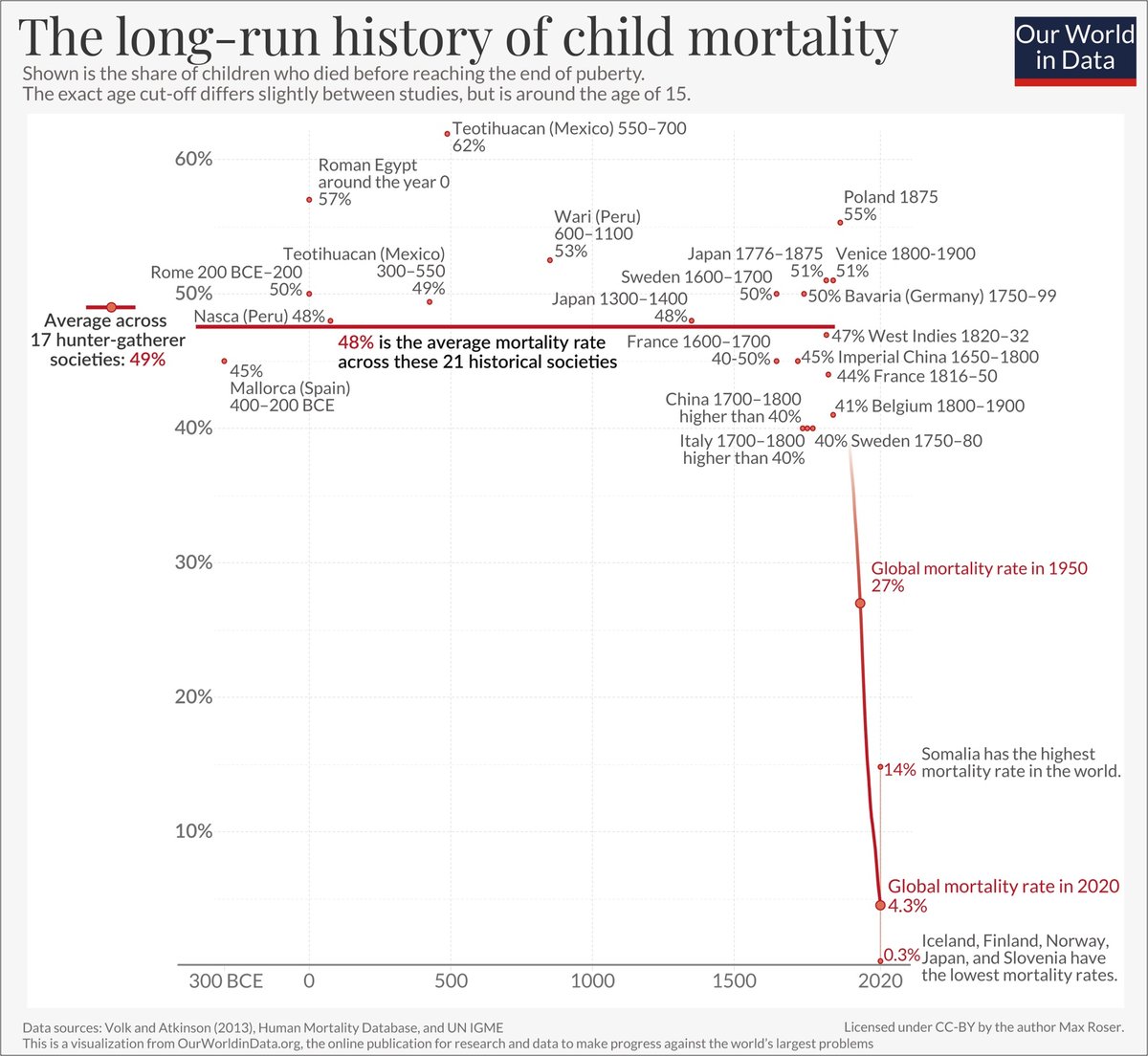
For most of human history, around 50% of children used to die before they reached the end of puberty. In 2020, that number is 4.3%. It’s 0.3% in countries like Japan & Norway.
This dramatic decline has resulted from better nutrition, clean water, sanitation, neonatal healthcare, vaccinations, medicines, and reductions in poverty, conflicts, and famine.
Before ~1800, almost every parent lost a child; now it’s such an uncommon experience that people have forgotten and want to ban vaccines.
GOSH doctors visited and observed the pit crew handoff in Italy. While visiting the Formula One pit crew the GOSH doctors became interested in the way they addressed possible failure. The crew sat around a big table analyzing and reanalyzing, asking, “What could go wrong?” and “What are we going to do if it does go wrong?” and “How important is it if it goes wrong?” Everyone’s ideas were given equal weight until the group ranked them using the failure modes and effect analysis (FMEA).
This anticipatory planning made the pit crew more prepared than the medical team whose strategy tended to be waiting until something went wrong to work out what they should have done. Observing the pit crew, the GOSH doctors noted the value of process mapping, process description, and trying to work out what people’s tasks should be. They learned the keys to a successful pit stop:
– The routine in the pit stop is taken seriously
– What happens in the pit stop is predictable so problems can be anticipated and procedures can be standardized
– Crews practice those procedures until they can perform them perfectly
– Everyone knows their job, but one person is always in charge
Among their findings that led to improvement:
While the main theme changes were more sophisticated procedures and better choreographed teamwork, another aspect of the Formula One handover process easily transferred to the hospital setting. The lollipop man is the one who waves the car in and coordinates the pit stop. He maintains overall situation awareness during the pit stop. In the old hospital handover there was no one like the lollipop man so it was unclear who was in charge. Under the new handover process, the anesthetist was given overall responsibility for coordinating the team until it was transferred to the intensivist at the termination of the handover. These same two individuals were charged with the responsibility of periodically stepping back to look at the big picture and to make safety checks of the handover.
According to this video about the hospital’s study, they were able to reduce the number of errors in the handover by 66%.
In the video, detective Beignet Blanc arrives to investigate who ate Cookie Monster’s triple berry pie.
I have arrived to this Street of Sesame on a sunny day turned cloudy. We have a culinary culprit in our oven mitts. And to solve this confectionary conundrum, we must look right in front of our googly eyes at Cookie Monster.
Underwater photographer Álvaro Herrero positioned himself in the midst of a humpback whale pod and captured on video several of the whales breaching high out of the water, including one that landed incredibly close to him. Since he was floating in the water, you get to see the whales underwater before they jump, breaching, and then diving down underwater again. Given how cool this looks on video, it must have been amazing to witness in person.
 Log in